
 See Our Latest Article on HelloNation
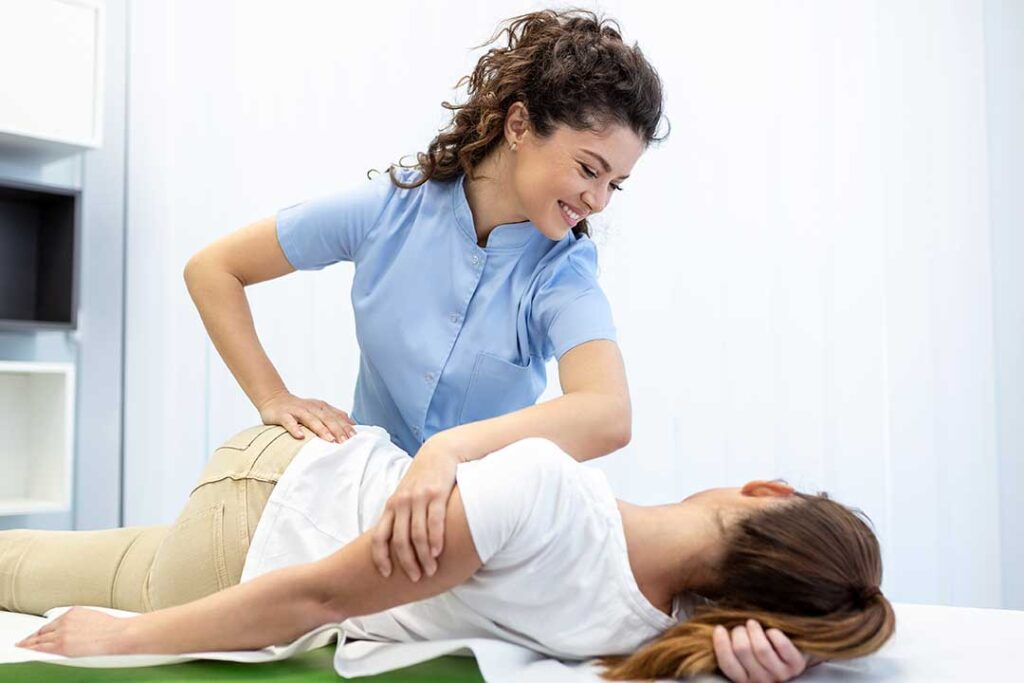
What is the Graston Technique?
The Graston Technique is a form of instrument-assisted soft tissue mobilization, often abbreviated as IASTM. During treatment, a trained clinician uses smooth, handheld instruments to assess and gently work on areas of muscle, fascia, tendons, or other connective tissue.
The instruments are not intended to “break up” tissue by force. Instead, they provide a different type of pressure and feedback than hands alone. Treatment is usually combined with movement, stretching, strengthening, joint care, or other rehabilitation methods rather than used as a stand-alone approach.
Graston Technique is a branded approach within the broader category of IASTM. Research on IASTM has examined changes in pain, movement, strength, and function, but results are mixed and vary by condition, treatment plan, and study quality. ([pubmed.ncbi.nlm.nih.gov](https://pubmed.ncbi.nlm.nih.gov/31322903/?utm_source=openai))
How is it used in chiropractic care?
In chiropractic care, instrument-assisted soft tissue work may be considered when muscles or connective tissues appear to be contributing to restricted movement, local tenderness, or difficulty tolerating activity.
A typical care plan may include:
- A health history and movement assessment
- Hands-on or instrument-assisted soft tissue treatment
- Spinal or extremity joint mobilization when appropriate
- Exercises to improve strength, coordination, or mobility
- Advice about gradually returning to work, recreation, or household activities
The technique may be applied to areas such as the shoulder, elbow, wrist, hip, knee, ankle, calf, or parts of the back. The appropriate location depends on the person’s symptoms and examination findings—not simply where discomfort is felt.
For example, someone in Sweden who develops calf or hip tightness after shoveling, yard work, cycling, or returning to exercise may have several contributing factors, including sudden workload changes, reduced conditioning, footwear, joint motion, or sleep and recovery habits. Soft tissue treatment may address one part of that picture, but it does not replace a broader assessment.
What does a session feel like?
Most people describe the pressure as firm, scraping, or rubbing along the skin. A lubricant is commonly used to allow the instrument to glide. Some areas may feel sensitive, especially when the tissue is already irritated.
Mild redness, tenderness, or small areas of bruising can occur afterward. These effects usually improve over a short period, but persistent or severe pain is not an expected goal of treatment. A useful session should be adjusted to the person’s tolerance and should not be treated as a test of endurance.
The clinician may ask the patient to move the affected body part during or after the technique. That helps connect the hands-on treatment with functional movement rather than focusing only on temporary sensations during the session.
What conditions might it be considered for?
Instrument-assisted soft tissue mobilization has been studied for a variety of musculoskeletal complaints, including some tendon, muscle, joint, and sports-related conditions. It may be considered when soft tissue sensitivity or limited mobility is part of the problem.
Possible examples include:
- Persistent muscle tightness after a change in activity
- Tendon-related pain being managed with a progressive exercise plan
- Reduced mobility after an injury has begun to heal
- Scar-related tissue sensitivity after appropriate medical clearance
- Limited movement associated with repetitive work or recreational activity
The evidence does not show that the technique is equally useful for every diagnosis. A systematic review found support for some improvements in range of motion, pain, or self-reported function, while another review found that adding IASTM did not consistently produce clinically meaningful benefits over other treatments. ([pubmed.ncbi.nlm.nih.gov](https://pubmed.ncbi.nlm.nih.gov/31322903/?utm_source=openai))
That means the technique should be viewed as one possible tool, not as a universal treatment for pain or stiffness.
Does it actually break up scar tissue?
“Breaking up scar tissue” is a common description, but it can create an inaccurate impression. Connective tissue is not usually being physically shredded or scraped apart. The effects may involve changes in sensitivity, movement, circulation, muscle tone, and how a person tolerates loading.
Scar tissue can be part of a complex healing process, and its appearance or presence does not automatically explain pain. Some scars are harmless, while others may be sensitive because of nerve involvement, inflammation, restricted movement, or an underlying injury.
For this reason, treatment should focus on measurable goals such as improved movement, better tolerance of activity, or reduced symptoms—not on the assumption that a particular area must be “broken up.”
Is bruising normal, and is the technique safe?
Mild bruising or temporary soreness can occur, but more pressure is not necessarily more effective. Excessive bruising may indicate that the treatment was too aggressive for the person’s current condition.
A careful health history matters before treatment. Extra caution or medical coordination may be needed for people with:
- Blood-clotting disorders
- Use of blood-thinning medication
- Fragile skin or impaired sensation
- Active skin infection or open wounds
- Recent surgery or an acute, unexplained injury
- Suspected fracture, blood clot, or serious neurological symptoms

Instrument-assisted treatment should not be applied over an area that is hot, severely swollen, infected, or acutely injured without an appropriate evaluation. New weakness, loss of coordination, unexplained weight loss, fever, chest pain, major trauma, or loss of bladder or bowel control require medical attention rather than soft tissue treatment.
How does seasonal activity affect the decision?
Seasonal routines in Sweden can influence how symptoms develop. Winter snow removal, icy walking surfaces, indoor exercise, and long periods of sitting may change the demands placed on the back, hips, shoulders, and legs. In warmer months, home maintenance, gardening, cycling, and outdoor recreation can increase activity quickly after a less active period.
The main issue is often a mismatch between current tissue capacity and sudden workload. A person who has not lifted, climbed, or exercised regularly may become sore after completing several hours of demanding work. In that situation, treatment may help comfort or movement, but gradual activity progression, rest, sleep, hydration, and strengthening are also relevant.
What questions should residents ask before treatment?
Useful questions include:
- What problem is this technique intended to address?
- How will progress be measured?
- What exercises or activity changes should accompany it?
- What level of soreness or bruising is expected?
- Are there reasons this treatment should be avoided?
- What alternatives are available if it does not help?
A clear explanation should connect the technique to a specific functional goal. If the only promised result is that tissue will be “broken up,” the explanation is incomplete.
What is a realistic expectation?
The most realistic expectation is that Graston Technique may help some people move more comfortably or participate in a broader rehabilitation plan. It is not a guaranteed solution, and it does not establish the cause of pain by itself.
Evidence for IASTM remains variable, with newer reviews continuing to report differences in outcomes and confidence in the research. ([pubmed.ncbi.nlm.nih.gov](https://pubmed.ncbi.nlm.nih.gov/40087631/?utm_source=openai)) A sensible approach is to reassess symptoms and function over time and continue only when the treatment appears to support meaningful progress.
For local residents managing recurring pain, the practical question is not whether the instrument feels effective during one session. It is whether movement, daily activity, work tolerance, or exercise capacity improves safely over the following days and weeks.
